
Utah Congressional District 4 Candidates Weigh In on Issues Important to the Business Community
October 16, 2026
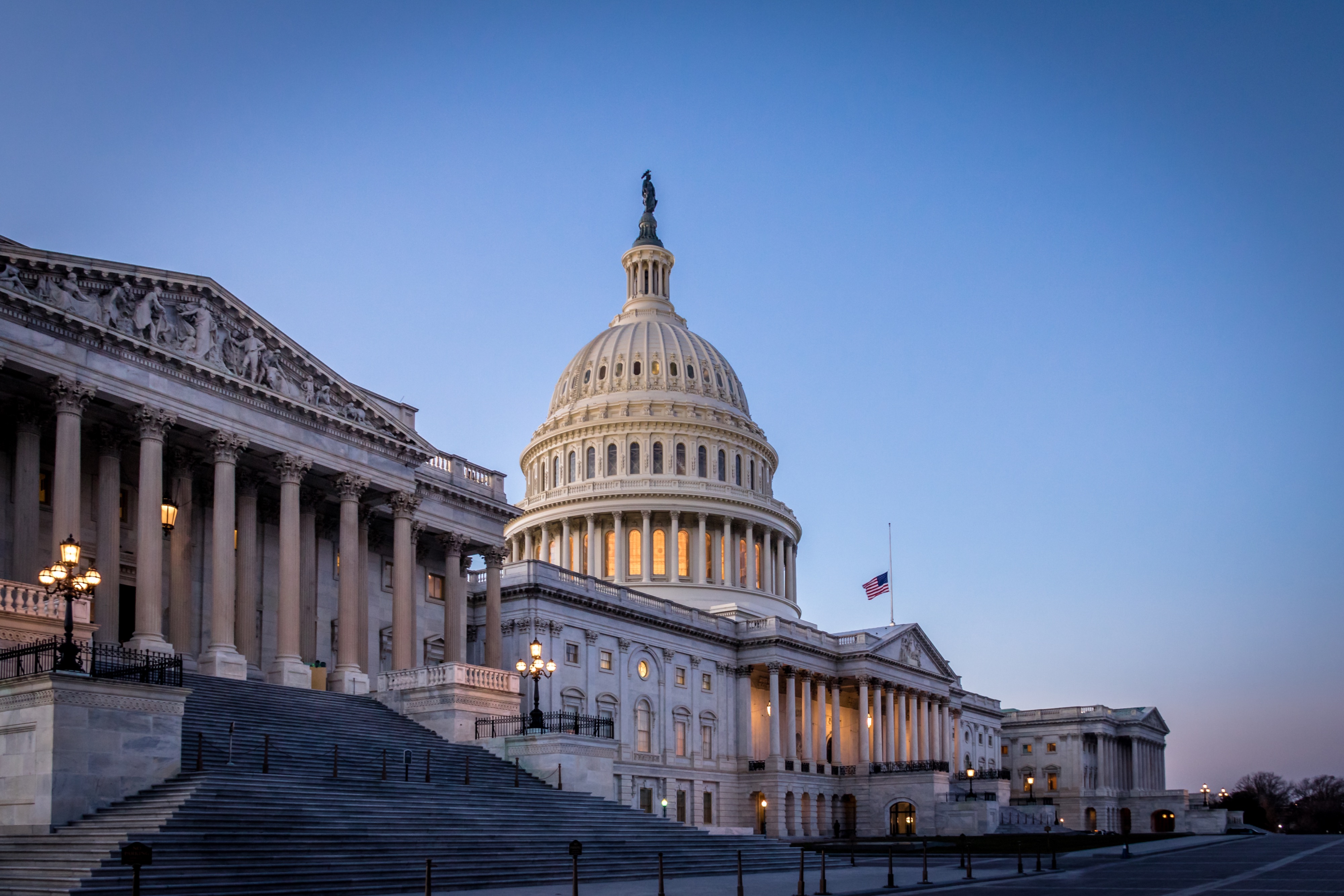
Ahead of the Nov. 3, 2026, general election, the Utah Chamber invited candidates officially nominated by a recognized political party for Utah’s 4th Congressional District to share their positions on policy priorities important to the business community.
Candidates were asked to respond to the following questions:
- How would you support the principles of free enterprise and advance policies that encourage entrepreneurship, investment, competition and economic growth both in Utah and nationally?
- With much of Utah’s land and many major projects subject to federal oversight, how would you improve federal regulatory and permitting processes to provide greater certainty and timely decision-making?
- How would you support Utah’s efforts to address water security, wildfire risk and responsible management of its public lands and natural resources?
- As one of the nation’s fastest-growing states and host of the 2034 Olympic and Paralympic Winter Games, how would you help Utah meet its growing transportation and infrastructure needs?
- As Utah employers face workforce shortages in key industries, how would you strengthen the state’s talent pipeline and help Utah businesses compete in domestic and international markets?
The following candidates provided responses and are listed in alphabetical order: Mike Kennedy (REP), Jonny Larsen (DEM) and Taylor Wright (LIB).
Disclaimer: The Utah Chamber encourages members of the business community to actively participate in the political process. The inclusion of candidates and their responses does not constitute or imply an endorsement by the Utah Chamber. The views and opinions expressed by candidates are their own and do not necessarily reflect those of the Utah Chamber.
Mike Kennedy, Republican Party
How would you support the principles of free enterprise and advance policies that encourage entrepreneurship, investment, competition and economic growth both in Utah and nationally?
Utah has been ranked the No. 1 overall State for four years in a row by U.S. News & World Report, and that is because Utahns are innovative, entrepreneurial and know how to put in the hard work. The best thing the federal government can do for our state is to get out of the way.
A smaller Washington means a stronger Utah. I will continue to cut red tape that chokes small business growth. I will continue to rein in agencies that have gone beyond their original scope, and I will continue to do everything I can to push power, and dollars, back to the states and to the people who live with the consequences of government.
I cosponsored the Main Street Capital Access Act, which vastly improves the ability of community banks to lend to entrepreneurs and small businesses in their own neighborhoods. I’ve voted against bloated spending bills, and I have always put your taxpayer dollars at the forefront of my decision-making in Washington.
With much of Utah’s land and many major projects subject to federal oversight, how would you improve federal regulatory and permitting processes to provide greater certainty and timely decision-making?
Washington’s bureaucracy is what is standing in the way of regulatory and permitting processes. The National Environmental Policy Act of 1969 required federal environmental review of major projects. That law has been warped and stretched beyond recognition. Reviews and lawsuits are abundant and also holding up the process. As Utahns, we want to be good stewards of the land, but having projects stay in limbo, even after legitimate concerns have been addressed, is not appropriate.
My License to Drill Act gives federal offices the resources to process energy permits without unnecessary delay. My Geothermal Royalty Reform Act removes outdated rules that penalize new geothermal facilities. My Streamline Transit Projects Act would allow states, rather than Washington, to manage environmental reviews for local transit projects.
Utahns know our communities better than a distant federal office ever will. I will keep working to move decisions closer to the people who live with them.
How would you support Utah’s efforts to address water security, wildfire risk and responsible management of its public lands and natural resources?
As vice chair of the House Subcommittee on Federal Lands, I work on these issues every week.
Water: Utah’s future depends on smart, forward-looking water policy. I introduced the Upper Price River Watershed Project Act with Sens. Mike Lee and John Curtis. It transfers 124 acres of federal land to the City of Price to build a 7,000-acre-foot reservoir, which will stabilize water supplies for homes, farms and businesses in one of Utah’s driest regions.
Wildfires: Years of federal mismanagement have left too many acres overgrown and vulnerable to catastrophic fire. I support proactive forest management and closer coordination with state and local partners. The House passed my Utah Wildfire Research Institute Act, which establishes a federal wildfire research institute at Utah State University. I also supported the Fix Our Forests Act, which gives land managers the tools to thin overgrown forests and remove dead and hazardous trees before they burn. This summer I visited the Babylon Fire command post in San Juan County to hear directly from the crews on the ground.
Public lands: More than 65% of Utah is under federal control. Those lands should remain open and accessible for recreation, hunting, grazing and responsible use, not locked away by Washington bureaucrats. I co-led the Public Lands Access Restoration Act, joined Utah’s delegation in working to overturn the disastrous Biden-era management plan for Grand Staircase-Escalante, and co-led legislation to invest in maintenance of our national parks to both protect the public lands we love and provide Utahns the access they need.
As one of the nation’s fastest-growing states and host of the 2034 Olympic and Paralympic Winter Games, how would you help Utah meet its growing transportation and infrastructure needs?
I serve on the House Transportation and Infrastructure Committee, including its subcommittee on highways and transit and the subcommittee on railroads, so Utah has a voice in the room where these decisions are made. Utahns need infrastructure that keeps pace with our rapid growth, and we cannot afford to see critical projects stalled by Washington red tape, especially with the upcoming 2034 Winter Games set in Salt Lake City.
A project delayed for years costs more and serves fewer people. I introduced the Streamline Transit Projects Act so Utah’s own agencies can manage environmental reviews for local transit projects. I also helped pass the SPEED Act to shorten cumbersome federal permitting timelines for every kind of infrastructure.
The 2034 Winter Games can be the best the world has ever seen. That will take significant building, and I will be a strong partner to our communities as they prepare. The roads, rail and transit we build for the Games should serve Utah families for generations after the closing ceremony.
Lastly, I led a multistate effort to the U.S. Department of Transportation supporting Utah’s bid to lead a federal pilot program for advanced air mobility, the next generation of electric aircraft. Utah was selected. I have also worked to improve rail safety and protect the supply chains that Utah jobs and families rely on.
As Utah employers face workforce shortages in key industries, how would you strengthen the state’s talent pipeline and help Utah businesses compete in domestic and international markets?
I truly believe that Utah’s greatest asset is its people. My focus is on opening more pathways into good jobs and removing the federal obstacles that hold our employers back. When government trusts businesses to compete on a level playing field, Utah companies can and will continue to thrive.
I introduced the TECH Act to make qualified technical colleges eligible for four existing federal grant programs, at no new cost to taxpayers, so students in the skilled trades are treated the same as those on a university track. I introduced the bipartisan Boosting the Rural STEM Pipeline Act to help rural schools hire well-trained science, technology, engineering and math teachers. I also sponsored the Let’s Get to Work Act to strengthen workforce participation, and the Time for Completion Act so students have accurate graduation information when choosing a school.
To help Utah businesses compete, I am working to cut the regulatory red tape Washington imposes in order to speed up permitting processes and lower costs. That also means protecting American research from foreign adversaries, which my U.S. Research Protection Act tackles.
Jonny Larsen, Democratic Party
How would you support the principles of free enterprise and advance policies that encourage entrepreneurship, investment, competition and economic growth both in Utah and nationally?
Free enterprise depends on competition, and in too many corners of Utah’s economy, there isn’t much competition left. Four companies now control about 85% of beef processing in this country. A rancher in Sanpete County has little choice but to take whatever price they offer. A farmer whose tractor breaks down during hay season may have to wait for a dealer to unlock a part they already paid for. That isn’t much of a free market when farmers and ranchers don’t have the right to repair their own equipment or are forced to buy licenses for the seeds they use.
I’d support strong antitrust enforcement against this kind of consolidation, and I’d make right-to-repair protections law for every equipment brand. The FTC recently required John Deere to give farmers and independent repair shops access to the same repair tools available to its dealers, but that settlement covers only one company and could be reversed by a future administration. Put those protections into law for every brand, and we can open a market for independent repair shops throughout rural Utah.
Utah’s small-business owners also struggle to compete with big-box stores and national chains. They aren’t asking for a handout. They’re asking for a fair shot against companies with enough market power to set the prices everyone else has to compete against. A healthy free market should give entrepreneurs a level playing field where they can compete, innovate, invest and grow.
With much of Utah’s land and many major projects subject to federal oversight, how would you improve federal regulatory and permitting processes to provide greater certainty and timely decision-making?
Talking with labor has given me a better understanding of how long federal permits can take. When a project waits years for a decision, it costs more, and the crews who would have built it move on. We need a permitting process that provides clear timelines and timely decisions while still protecting the public interest.
The License to Drill Act would allow oil and gas permits to move more quickly on our public lands. Utahns have made it clear that they do not support that approach, and I want them to know that I hear them. Public lands should remain in public hands. The reason we leave so much of our public land undeveloped is not because it is meant to be treated like a museum. It is because protecting these lands helps ensure healthy ecosystems for future generations.
That also means making sure the agencies responsible for managing our public lands have the resources they need. The Forest Service lost thousands of employees in 2025, and the number of acres it treated for wildfire risk dropped 35% that same year. I would work with my colleagues to properly fund the Forest Service and support our volunteer firefighters. I see them as no different from my veteran brothers and sisters. They are fighting a different kind of battle, one against fire, and their work protects thousands of residents in communities like Eureka and Fillmore.
Faster cannot mean careless. I have spent a lot of time listening to labor and learning from the AFL-CIO, the Teamsters and the United Steelworkers. They want projects completed safely, and they want them completed on time. That kind of good-faith collaboration should be part of how we improve the federal permitting process. When agencies, workers, communities and businesses are willing to work together on what is best for the people, we can make decisions more efficiently while still protecting workers, communities and our public lands.
How would you support Utah’s efforts to address water security, wildfire risk and responsible management of its public lands and natural resources?
This summer, the Iron Fire forced the whole town of Eureka to evacuate. Toxic dust from the shrinking Great Salt Lake threatens more than 2 million people and runs up to $116 million a year in health costs. With most of Utah’s land managed by the federal government, these are federal problems as much as state ones.
Agriculture accounts for 80% of Utah’s water use, so that’s where the lake gets saved or lost. Federal dollars should help farmers convert to efficient irrigation and put the saved water in the lake, not just on the next field. Congress should tie every dollar to lake elevation and fund it beyond one budget cycle. Water, not land, is the real limit on how Utah grows. If we have to keep approving data centers, we should require them to recover water from their waste methane.
The Forest Service is moving its headquarters to Salt Lake City, but it only matters if the agency has the crews to do the work. Thinning, brush clearing and controlled burns help determine how bad a fire gets before it ever starts, and that work fell off when the people left. Congress should fully fund the Forest Service and our volunteer firefighters instead of cutting the resources they need. The One Big Beautiful Bill, which Rep. Kennedy voted for, included cuts to Forest Service funding.
Public lands stay public. Grazing, hunting, guides, tourism and the PILT payments that support county services all depend on them. Utahns pushed back when Rep. Celeste Maloy proposed selling about 11,500 acres of public land in southwestern Utah, and Sen. Mike Lee later proposed selling millions of acres of federal land across the West. Both proposals faced significant opposition and ultimately failed in their original forms. Rep. Kennedy has aligned himself with that broader push to transfer control of federal lands to states and local communities, including calling for Utah’s federal lands to be returned to local control.
I believe Utah’s public lands belong to all Utahns. They should be managed responsibly, kept accessible for recreation and working lands and protected for the generations who come after us. As your representative, I would fight to keep them public, fully fund the people who manage them and make wildfire prevention a federal priority.
As one of the nation’s fastest-growing states and host of the 2034 Olympic and Paralympic Winter Games, how would you help Utah meet its growing transportation and infrastructure needs?
Utah’s growth is outrunning its roads and rails. Herriman has nearly tripled in size since 2010. Out in the rural counties, the worry is keeping old bridges open.
Washington is making it harder. The authorization for the federal highway program expired Sept. 30. The House Transportation Committee passed a five-year replacement 62 to 2 back in May, and it still hasn’t had a floor vote. Congress passed a stopgap through Dec.11 instead, and it left out about $36.8 billion in grants, including bridge money counties count on. UDOT can’t plan for the 2034 Games on a few months of funding at a time, and a contractor can’t hire a crew that way either.
I’d push for a full, multiyear highway bill that gives states certainty, protects the bridge program and builds with American steel and American workers. I’d also fight to get FrontRunner double-tracking across the line. It’s in the final phase of a nearly $1.3 billion federal grant, and it will keep serving commuters long after the Olympics leave.
Infrastructure starts with water, too. A road to a new subdivision doesn’t help anyone if there’s no water for the homes at the end of it. Federal infrastructure investments should help Utah repair aging water systems, improve irrigation efficiency and build the infrastructure needed to move and conserve water. Growth has to come with the roads, bridges, transit and water systems to support it.
As Utah employers face workforce shortages in key industries, how would you strengthen the state’s talent pipeline and help Utah businesses compete in domestic and international markets?
My GI Bill ran out before I could finish college, leaving me just short of a dual degree in applied mathematics and physics. A lot of young people here don’t need a four-year degree and the debt that comes with it. They need more affordable public higher education options or access to trade schools that put them into jobs where we have high demand. I’d work with union leaders to expand apprenticeships that unions and employers run together, so people earn a paycheck from day one while Utah businesses get workers trained for the jobs they actually need.
About 58,400 people in this district work in health care and social assistance, and in many small towns, the hospital is one of the biggest employers. When a rural hospital loses Medicaid funding, nurses and technicians lose their jobs, and young families can follow them out of town. Protecting access to health care is also an economic development issue, especially in rural Utah.
Immigrants make this country great, and Utah’s farms and construction crews depend on them. I support a path to citizenship for people whose work keeps our economy running, and visa programs that bring in talent we can’t find here without being used to undercut the workers we already have. We can strengthen our workforce while making sure every worker is treated fairly.
To compete overseas, Utah businesses need trade rules they can count on. The Constitution gives Congress the power to tax, and a tariff is a tax. Tariffs can raise costs for American families and businesses, and the current tariff regime has been estimated to cost the typical household about $1,000 this year. Targeted tariffs that Congress votes on to protect critical supply chains can make sense. Tariffs that change by announcement make it impossible for a business to plan a contract, an export deal or a hiring budget.
Taylor Wright, Libertarian Party
How would you support the principles of free enterprise and advance policies that encourage entrepreneurship, investment, competition and economic growth both in Utah and nationally?
Economic growth does not originate in Washington. It comes from individuals saving, investing, innovating, producing and voluntarily exchanging with one another. Government’s proper economic role is to protect property rights and contracts — not decide which industries, technologies or businesses deserve to succeed.
I would work to reduce taxes, spending, regulation, subsidies and barriers to entry. I oppose corporate welfare just as strongly as I oppose excessive regulation. A truly free market means no special favors for politically connected corporations and no government barriers protecting established businesses from new competitors.
I also strongly oppose protectionist tariffs. Tariffs are taxes, and they make Americans poorer by raising the cost of goods, materials and production. Bastiat understood that destroying or restricting exchange does not create prosperity, and Hazlitt reminded us to examine the consequences of economic policy for everyone — not merely the politically favored industry receiving protection. Congress should reclaim its constitutional authority over trade and tariffs.
Utah does not need Washington directing its economy. It needs Washington to stop standing in the way of Utah’s entrepreneurs.
With much of Utah’s land and many major projects subject to federal oversight, how would you improve federal regulatory and permitting processes to provide greater certainty and timely decision-making?
The fundamental problem with federal permitting is not simply that government needs to become more efficient at regulating people. Washington exercises too much authority over decisions that should belong to individuals, property owners, communities and states.
I would eliminate unnecessary federal regulations, establish firm deadlines for permitting decisions, prevent agencies from subjecting projects to repetitive reviews and return substantially more decision-making authority to Utah.
If a business complies with clear rules protecting the property and rights of others, government should not be able to hold a project hostage for years through an endless bureaucratic process.
Regulatory uncertainty is itself a cost. Capital waits. Projects disappear. Housing becomes more expensive. Businesses invest elsewhere. Those costs rarely appear in a federal budget, but Utah families and entrepreneurs still pay them.
The presumption should be liberty: government should have to justify interfering with peaceful economic activity, rather than requiring citizens to continually ask Washington for permission.
How would you support Utah’s efforts to address water security, wildfire risk and responsible management of its public lands and natural resources?
Utahns have a greater stake in Utah’s future than bureaucracies in Washington, D.C. Decisions involving Utah’s land, water and natural resources should therefore be made as close as possible to the people affected by them.
I support dramatically increasing state, local and private responsibility for land and resource management while protecting legitimate property rights. Markets, property rights and local knowledge generally produce better incentives for stewardship than distant bureaucratic management.
On wildfire, we should allow more active forest management, responsible grazing, hazardous-fuel reduction and other practices that reduce catastrophic fire risk rather than allowing regulatory paralysis to prevent responsible management.
On water, conservation is important, but prices, property rights, technology and innovation can accomplish things political mandates often cannot. When people face accurate incentives and are free to innovate, scarce resources move toward more valuable uses.
My guiding principle is simple: decentralize authority, respect property rights and allow Utahns to manage Utah.
As one of the nation’s fastest-growing states and host of the 2034 Olympic and Paralympic Winter Games, how would you help Utah meet its growing transportation and infrastructure needs?
Infrastructure should serve Utahns — not politicians, bureaucracies or politically connected contractors.
The 2034 Olympics should not become an excuse for a federal spending spree. Where legitimate infrastructure needs exist, Utah should determine its priorities, projects should face transparent cost-benefit scrutiny and federal permitting barriers should be removed so necessary construction does not take a decade.
I would oppose earmarks and politically motivated projects whose costs exceed their benefits. Federal transportation dollars should come with fewer Washington mandates and substantially greater state flexibility.
More fundamentally, Washington should stop collecting enormous amounts of money from states, attaching federal conditions to it and then returning a portion while calling it assistance. Whenever practical, transportation authority and financing should move closer to the people actually using and paying for the infrastructure.
The goal should not be to spend more. The goal should be to build what Utah actually needs while getting government obstacles out of the way.
As Utah employers face workforce shortages in key industries, how would you strengthen the state’s talent pipeline and help Utah businesses compete in domestic and international markets?
Businesses do not suffer from a shortage of government workforce programs. They suffer when government makes hiring, training, housing, investing and doing business unnecessarily expensive.
The best workforce policy is a growing free economy.
I support apprenticeships, employer-directed training and alternative education models because there is no reason Washington should dictate one pathway from education into employment. Individuals and employers are far better positioned to determine which skills have value than federal bureaucracies.
I would also reduce occupational licensing barriers, unnecessary employment regulations and federal policies that increase the cost of hiring workers.
For Utah companies competing internationally, I would pursue genuine free trade — not tariffs, industrial policy or subsidies designed to protect politically favored industries. Competition makes American businesses stronger. Protectionism shields producers from competition while forcing consumers and other businesses to pay the bill.
We have to look beyond the immediate beneficiary and consider the consequences of a policy for everyone. That principle should guide Congress.
Prosperity does not require Washington to engineer the economy. It requires protecting property rights, allowing voluntary exchange and giving free people the space to build, invest, work and create.