
Utah Congressional District 3 Candidates Weigh In on Issues Important to the Business Community
October 14, 2026
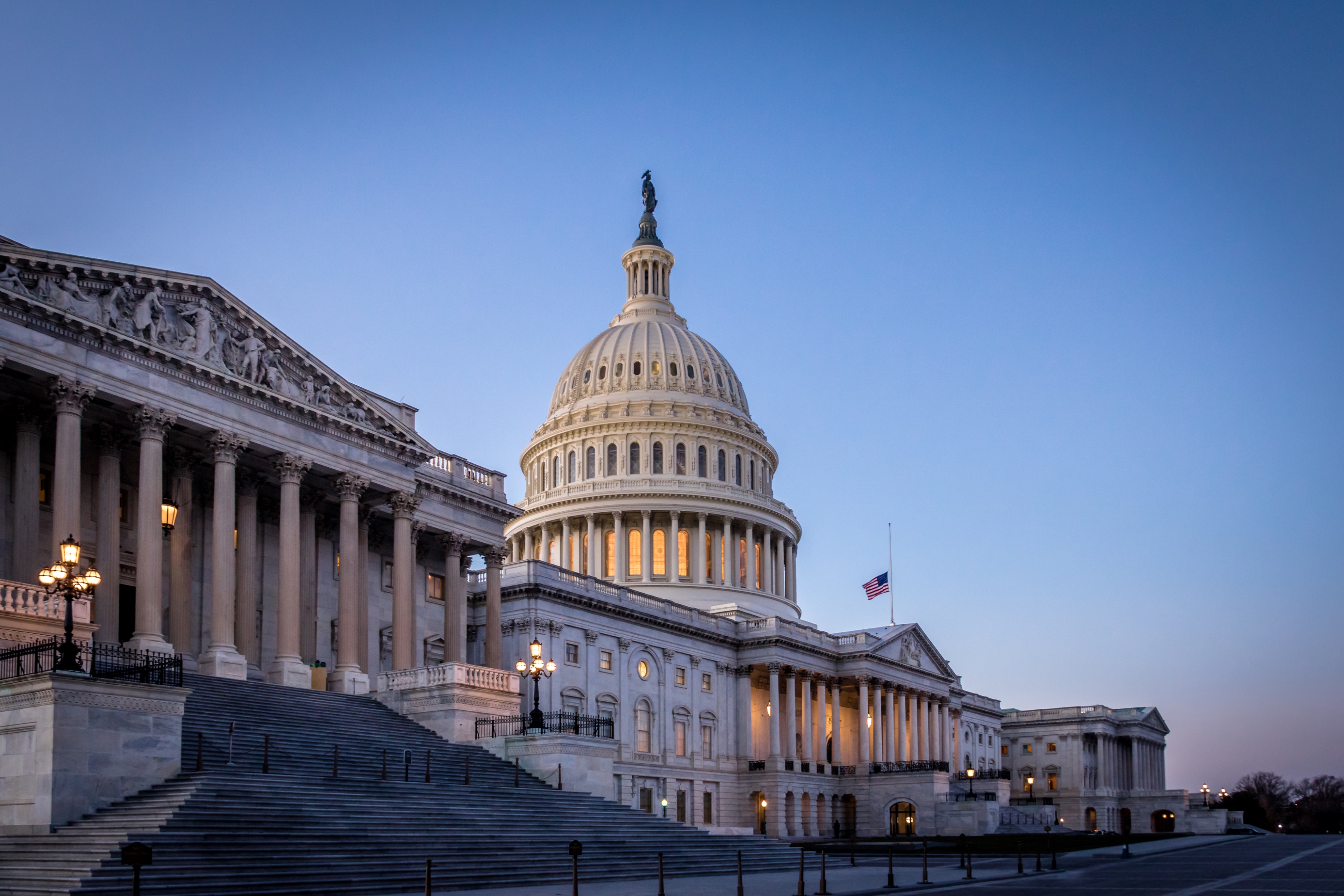
Ahead of the Nov. 3, 2026, general election, the Utah Chamber invited candidates officially nominated by a recognized political party for Utah’s 3rd Congressional District to share their positions on policy priorities important to the business community.
Candidates were asked to respond to the following questions:
- How would you support the principles of free enterprise and advance policies that encourage entrepreneurship, investment, competition and economic growth both in Utah and nationally?
- With much of Utah’s land and many major projects subject to federal oversight, how would you improve federal regulatory and permitting processes to provide greater certainty and timely decision-making?
- How would you support Utah’s efforts to address water security, wildfire risk and responsible management of its public lands and natural resources?
- As one of the nation’s fastest-growing states and host of the 2034 Olympic and Paralympic Winter Games, how would you help Utah meet its growing transportation and infrastructure needs?
- As Utah employers face workforce shortages in key industries, how would you strengthen the state’s talent pipeline and help Utah businesses compete in domestic and international markets?
Candidate responses are listed in alphabetical order.
Disclaimer: The Utah Chamber encourages members of the business community to actively participate in the political process. The inclusion of candidates and their responses does not constitute or imply an endorsement by the Utah Chamber. The views and opinions expressed by candidates are their own and do not necessarily reflect those of the Utah Chamber.
Cassie Easley, Constitution Party
How would you support the principles of free enterprise and advance policies that encourage entrepreneurship, investment, competition and economic growth both in Utah and nationally?
I support free enterprise by protecting economic freedom, reducing unnecessary regulations, defending property rights and fair competition and letting entrepreneurs and small businesses thrive without unnecessary interference. That applies to both Utah and nationally.
With much of Utah’s land and many major projects subject to federal oversight, how would you improve federal regulatory and permitting processes to provide greater certainty and timely decision-making?
I would reduce unnecessary bureaucracy, set clear timelines and require agencies to make timely decisions. Federal regulation should be limited to their constitutional authority, while giving greater certainty for Utah communities, landowners and businesses to responsibly develop and use our resources.
How would you support Utah’s efforts to address water security, wildfire risk and responsible management of its public lands and natural resources?
I would ensure that the federal agencies that are responsible for managing our public lands and natural resources have the funding and accountability needed to manage those resources responsibly so they are preserved and accessible for future generations.
As one of the nation’s fastest-growing states and host of the 2034 Olympic and Paralympic Winter Games, how would you help Utah meet its growing transportation and infrastructure needs?
I would focus on transportation infrastructure through state and local coordination, keeping federal involvement within constitutional limits and ensuring project benefits for Utahns beyond 2034.
As Utah employers face workforce shortages in key industries, how would you strengthen the state’s talent pipeline and help Utah businesses compete in domestic and international markets?
I believe in empowering Utah’s workforce through education and training that meet local needs, cutting red tape that slows opportunity and letting businesses compete on a level playing field, guided by free enterprise and entrepreneurs.
Celeste Maloy, Republican Party
How would you support the principles of free enterprise and advance policies that encourage entrepreneurship, investment, competition and economic growth both in Utah and nationally?
Free enterprise works best when the government sets clear rules, enforces them fairly and then gets out of the way.
A major focus of mine in Congress has been reducing the uncertainty and delay that make it harder for businesses to invest and grow. I introduced the FREE Act to create a faster, more predictable federal permitting process, including a permit-by-rule system for projects that meet clear standards.
I also introduced the GEO Act to establish clearer timelines for geothermal development — an area where Utah has enormous opportunity.
I have also supported permanent tax provisions that allow businesses to invest, expand and keep more capital working in the private economy, including making the qualified business income deduction permanent and restoring permanent 100% bonus depreciation for qualifying investments.
My goal is simple: lower barriers to investment, encourage competition and give Utah businesses the certainty they need to grow.
With much of Utah’s land and many major projects subject to federal oversight, how would you improve federal regulatory and permitting processes to provide greater certainty and timely decision-making?
Permitting reform is one of my top priorities because Utah feels the effects of federal delay more than most states.
Businesses and communities should know the rules, know the timeline and get a decision. They should not spend years waiting for Washington to act.
That is why I introduced the FREE Act to replace vague and open-ended permitting processes with clearer standards and predictable timelines. I introduced the GEO Act for the same reason to establish deadlines for federal action on geothermal applications.
Environmental review matters, but delay is not the same thing as environmental protection. We can protect resources while approving good projects faster and providing greater certainty to communities and investors.
How would you support Utah’s efforts to address water security, wildfire risk and responsible management of its public lands and natural resources?
I spent much of my career working on water, public lands and natural resource issues, so I understand how closely these issues are tied to Utah’s economy and quality of life.
On water, we need conservation, better infrastructure, responsible development of new supplies and voluntary tools that help farmers, ranchers and communities make the most of the water they have while protecting existing agricultural water rights. Additionally, Utahns must remain in control of Utah’s water.
On wildfire, prevention matters. We need active management of forests and rangelands, faster approval of hazardous-fuel reduction projects and better protection of watersheds and communities.
On public lands, federal agencies need to work with the people who actually live in the West. As chair of the Congressional Western Caucus, I am focused on practical, multiuse stewardship that protects healthy landscapes while maintaining recreation, grazing, energy and mineral development and strong rural economies.
As one of the nation’s fastest-growing states and host of the 2034 Olympic and Paralympic Winter Games, how would you help Utah meet its growing transportation and infrastructure needs?
Utah is growing quickly, and our infrastructure needs to keep pace. The federal government’s role should be to remove unnecessary barriers, respect state and local priorities and make sure taxpayer dollars are used responsibly.
I have requested funding for improvements at the St. George Regional Airport to help meet the needs of one of the fastest-growing parts of our state. I have also supported targeted transportation investments, including paratransit vehicles that serve seniors and Utahns with disabilities.
The 2034 Games should not become an excuse for unnecessary federal spending, but where federal investment is appropriate, it should support projects Utah already needs, provide clear long-term value, and leave our communities stronger after the Games are over.
As Utah employers face workforce shortages in key industries, how would you strengthen the state’s talent pipeline and help Utah businesses compete in domestic and international markets?
Utah employers need skilled workers, and the government should make it easier for people to get the training they need and get to work.
I supported legislation creating Workforce Pell Grants so eligible students can use federal aid for qualifying short-term career and technical training programs.
I have also worked to help legitimate small businesses compete fairly for federal contracts, including through my bipartisan Women-Owned Small Business Integrity Act, which passed the House.
I am a member of the Congressional FFA Caucus because agriculture and natural-resource industries need a strong next generation of workers. I also introduced the Rural Emergency Response Support Act to address a federal scheduling disparity that makes it harder for rural EMS agencies to recruit and retain personnel.
We should expand access to practical training, reduce unnecessary licensing and regulatory barriers and give states and employers more flexibility to respond to their own workforce needs.
How would you support the principles of free enterprise and advance policies that encourage entrepreneurship, investment, competition and economic growth both in Utah and nationally?
There are many policies that would support the principles of free enterprise to encourage entrepreneurship, investment, competition and economic growth both in Utah and nationally. Fundamentally, businesses need customers and customers need incentives and resources to buy and invest. Government shouldn’t be in the business of picking winners and losers. It should, instead, create an environment where free market forces can evolve.
As an example, one policy that I’m promoting is a carbon fee with all proceeds returned to citizens. The fee would be equal to the value of heat produced by burning enough carbon to create a ton of CO2 (about $70 per ton). That would be the best fair, free-market approach to global warming, which is resulting in real additional costs borne by Americans such as insurance, food and water. That would lead to a renaissance in energy innovation in the private sector and provide customers with additional resources to invest in energy-related infrastructure such as solar, wind, conservation and nuclear. Noting that half of our CO2 production comes from the top 10-15% of household incomes, 85-90% of households would see a net benefit. Other than setting up the financial system for collection and disbursement, there would be no cost to governments.
With much of Utah’s land and many major projects subject to federal oversight, how would you improve federal regulatory and permitting processes to provide greater certainty and timely decision-making?
Public lands are Americans’ land. They are a treasure to be passed on to future generations. Thus, multiple uses such as grazing, tourism, hunting, fishing, logging and energy extraction can be accommodated without long-term damage to those lands. Mining is more problematic. Any mining or energy extraction operation should be conditioned with bonds to ensure sites are remediated after operations to ensure that the public is not left to fund those remediation actions after the companies leave. The culture of federal oversight should be changed from policing to cooperation.
How would you support Utah’s efforts to address water security, wildfire risk and responsible management of its public lands and natural resources?
Water is life, particularly in Southern Utah. However, the trends of decreasing precipitation with rising global temperatures leaves us vulnerable to water shortages such as we are experiencing this year. Therefore, in concert with actions to address climate change, water conservation balanced with necessary farm water uses will be needed.
Wildfire risks will always be with us. Our response should be removal of combustible material near areas of population, and the use of those products for salvageable timber, energy production and soil amendment. Fire management should not be used as an excuse to increase logging of healthy forests. Most of our vulnerable forests are on federal land, and Utah’s effort should be focused on cooperation with federal agencies tasked with public land management.
As one of the nation’s fastest-growing states and host of the 2034 Olympic and Paralympic Winter Games, how would you help Utah meet its growing transportation and infrastructure needs?
Investment in public transportation should be a priority. Buses and trains are proven approaches to reducing traffic in populated areas. Housing development in locations near access to public transportation should be part of overall planning. Improvement of roads in less populated areas will be necessary for safety and decreased travel time.
As Utah employers face workforce shortages in key industries, how would you strengthen the state’s talent pipeline and help Utah businesses compete in domestic and international markets?
Training is key to strengthening the state’s talent pipeline. Vocational education should be emphasized for those who choose trades versus university education. Apprenticeships and internships are important parts of that training in order for our workforce to prepare for lifelong fulfilling vocations.